Testing at Cinch
Most of what goes into Cinch hardware happens before there's a product to photograph. Whiteboard or pencil sketches. Prototypes that get pulled apart on purpose. A part that fails on a jig in the shop long before it ever gets close to shipping. This is what that part of the process actually looks like.
The real starting point isn't the printer, though. It's identifying that the need exists at all, a strap or connection point where the hardware on the market doesn't work for the hand using it, or doesn't hold up the way it needs to in the field. That's usually where a piece of Cinch hardware actually begins, before any material or geometry gets chosen.
Once we know what problem we're solving, every Cinch design starts as a 3D print. Not because it's the cheap option, though it is, but because it's the fastest way to get a real, functional mechanism into someone's hand instead of a rendering on a screen. We can feel right away whether a geometry actually works, where a catch wants to give, whether something that looks intuitive on paper is actually intuitive when a hand is operating it. That prototype stage is also where a design starts becoming part of our patent record. These are real mechanisms tested against real forces, not sketches with a patent number attached later.
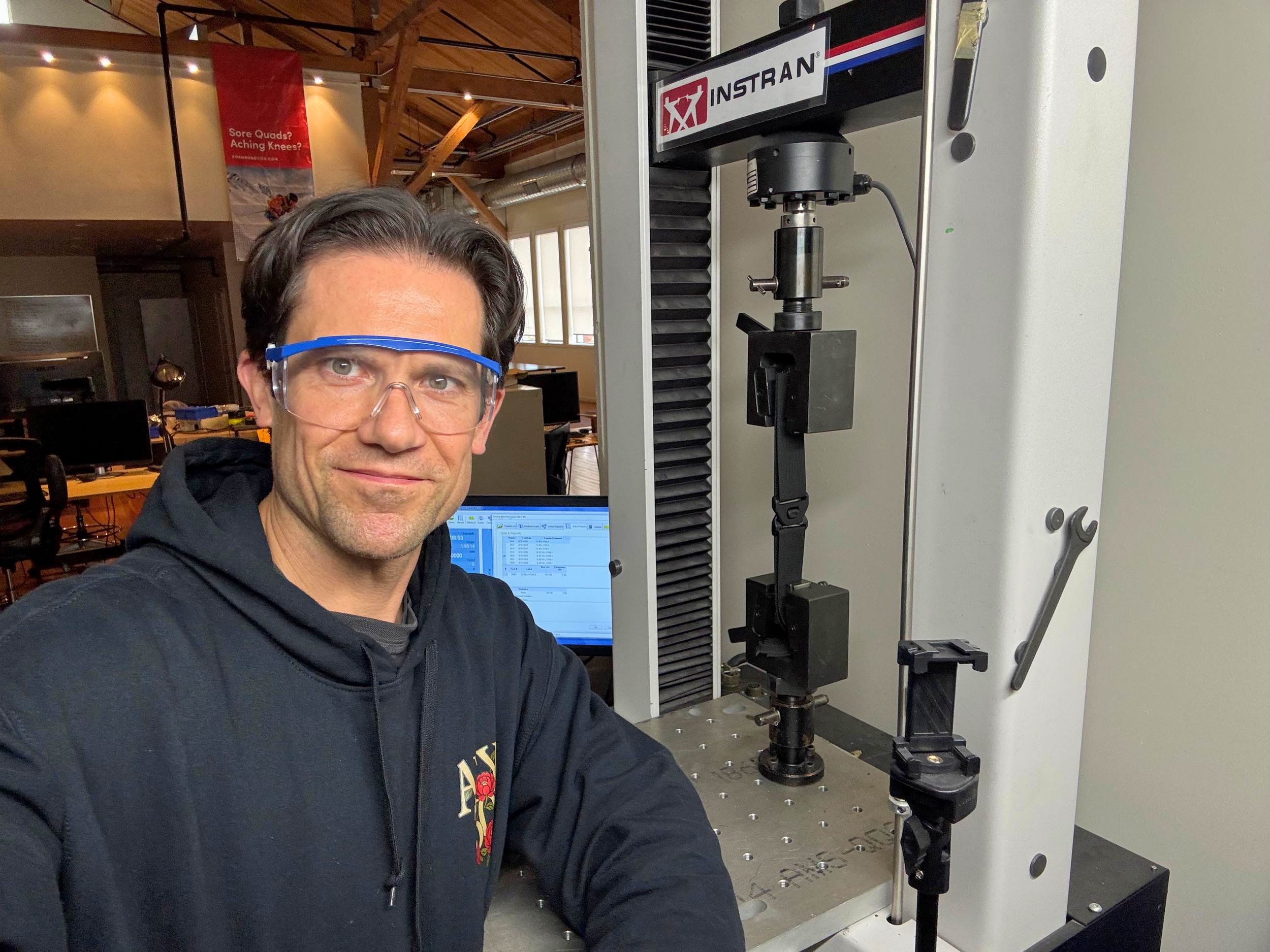
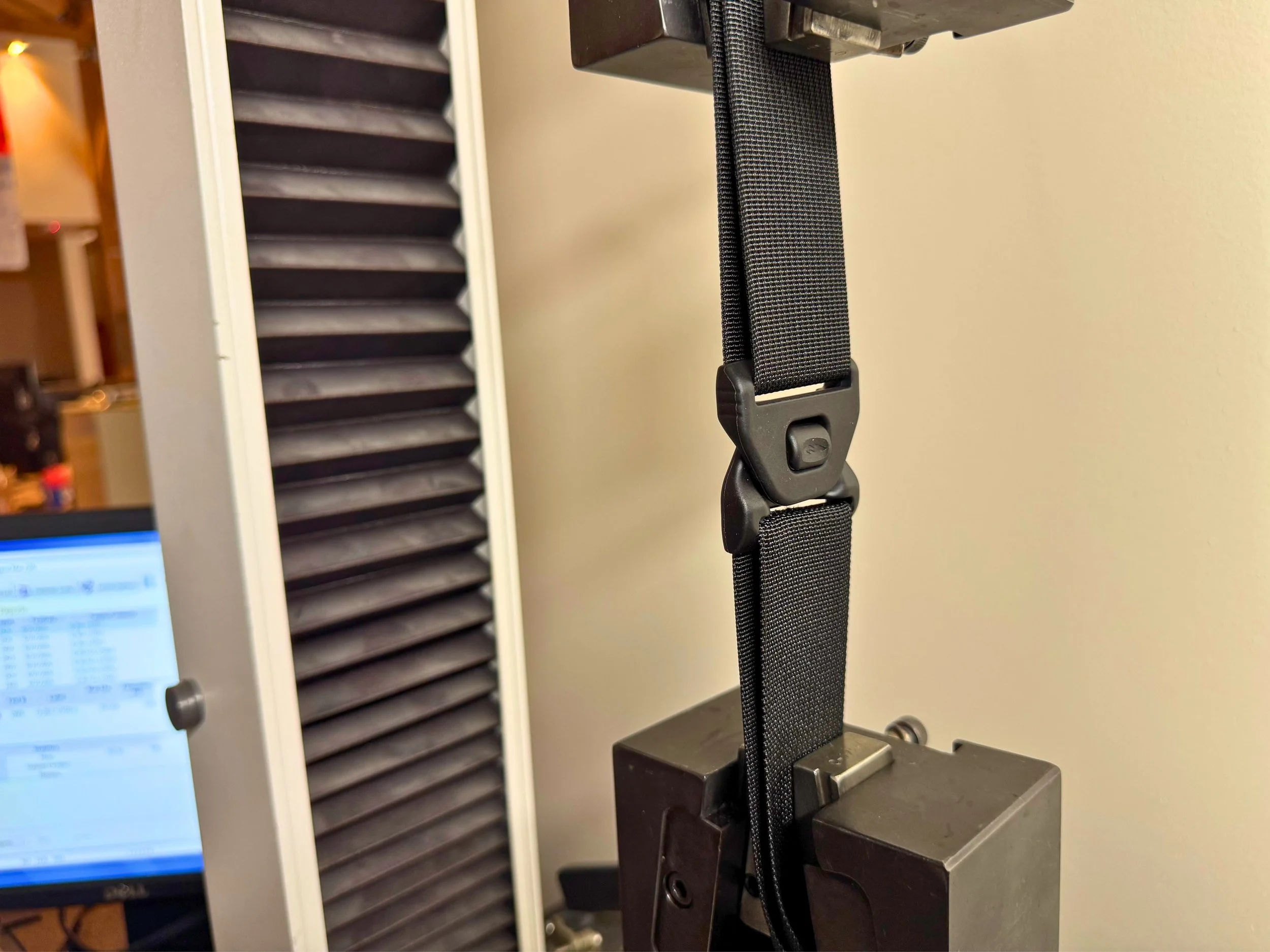
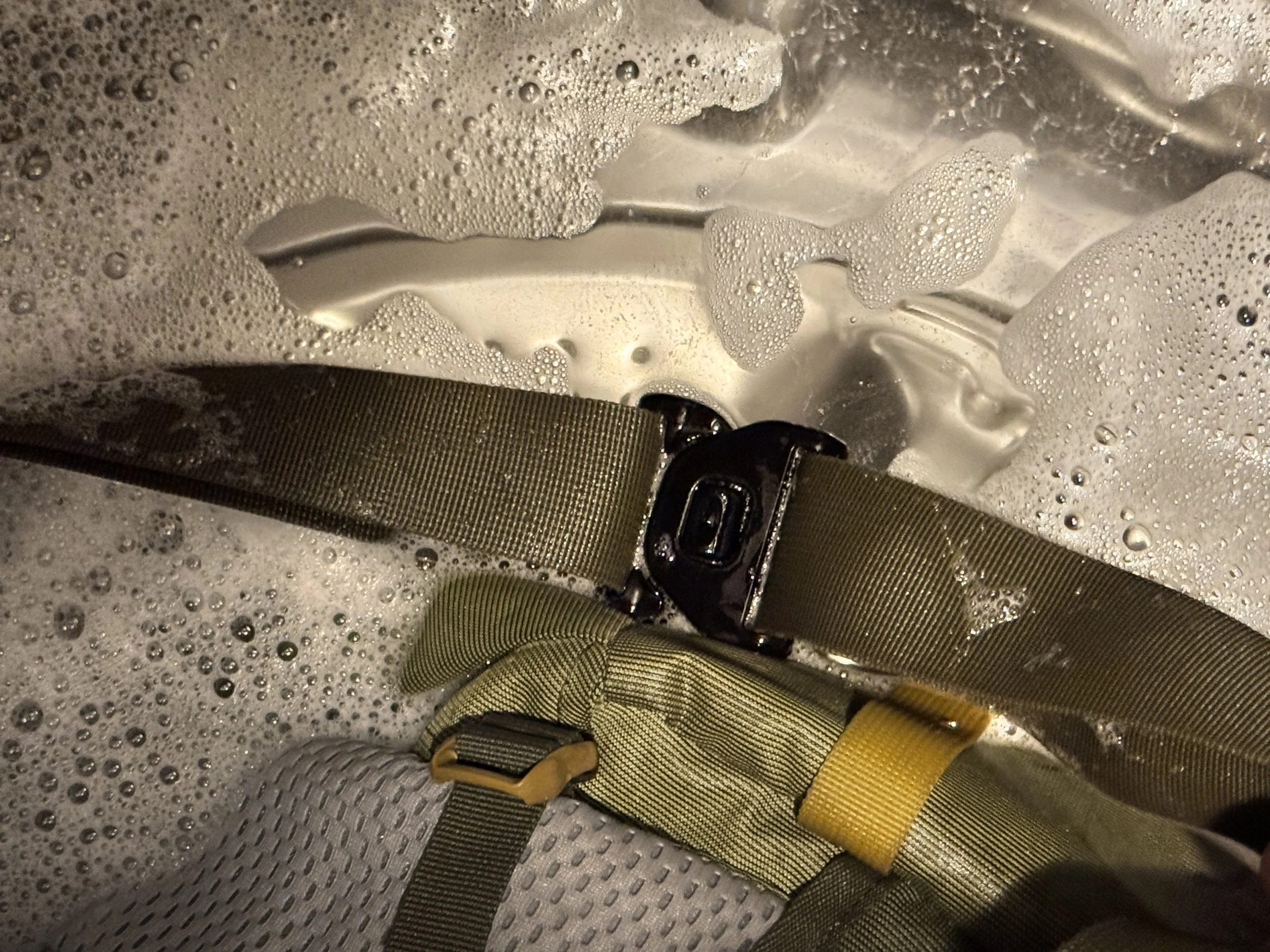
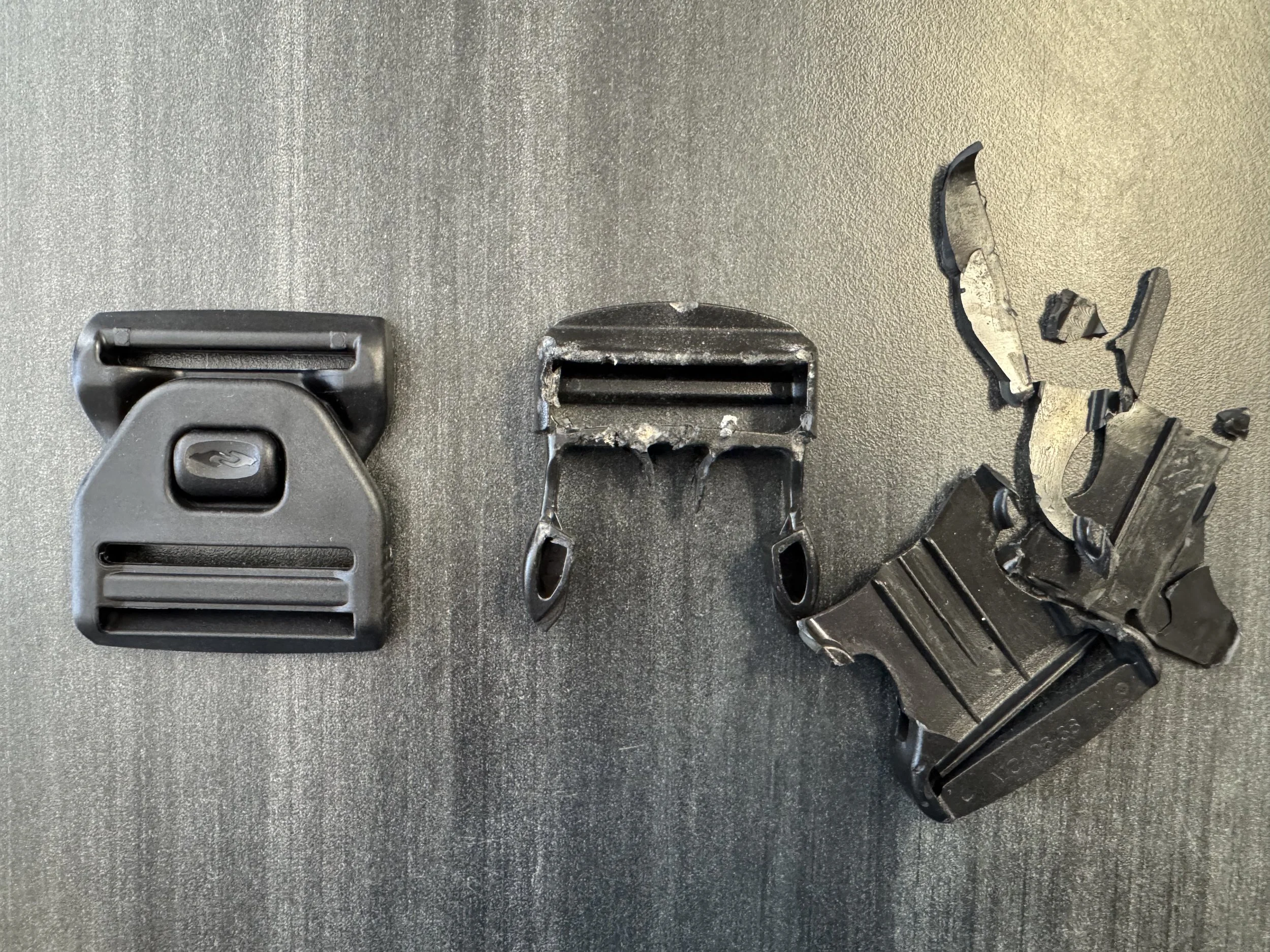
We test hard at that stage, and we test to break things. Garrett runs prototypes through pull and load testing on an Instron machine in the shop, looking for where a part actually fails, not where we hope it will. We run that alongside material calculations, so we're building toward what a production material can hold, not guessing from a printed part. Impact, water exposure, temperature swings, repeated open and close cycles. A design gets rejected, rebuilt, and pulled apart again as many times as it takes. That includes our magnetic lines. Magnets handle alignment and getting a connection started; the mechanical geometry underneath is what actually holds under load, and it gets tested exactly the same way a purely mechanical design does.
At some point, a design earns its way out of that stage, and that's a strange thing to watch happen. After enough parts have broken on purpose, one holds. Then it holds again. Somewhere in there, it stops being a question we're asking and starts being a piece of hardware someone is actually going to rely on. That's when it moves to tooling.
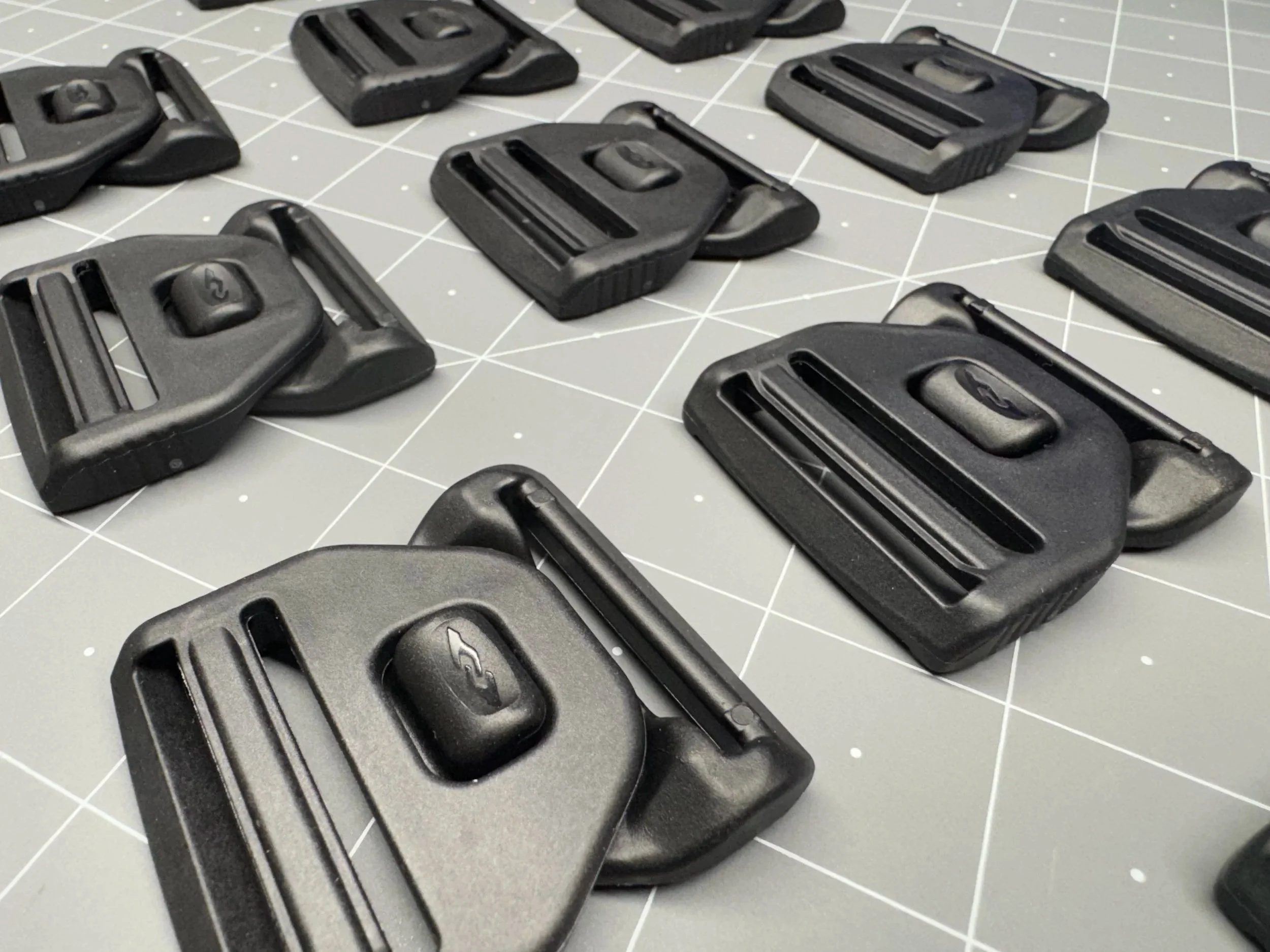
From there it's injection molding, final material selection, a final freeze on the geometry. And here's the part that matters most: the finished production part goes back on the same equipment, the same pull and load testing the prototype went through. Not a lighter version of the test. The same one. If it doesn't hold up the way the tested prototype did, it doesn't ship.
Hardware only works if you can count on it. That's the entire reason we test it this hard before anyone else ever will.
If you're curious how all of this plays into the intellectual property we're protecting with patents, that's laid out in our IP statement. Want the testing standards themselves in more detail, impact, water, temperature, and cycle testing? Reach out to us directly. And if you're wondering how any of this holds up specifically in sand or dirt, that's one of the questions we get most, answered on our FAQ page.